


Fast Facts:
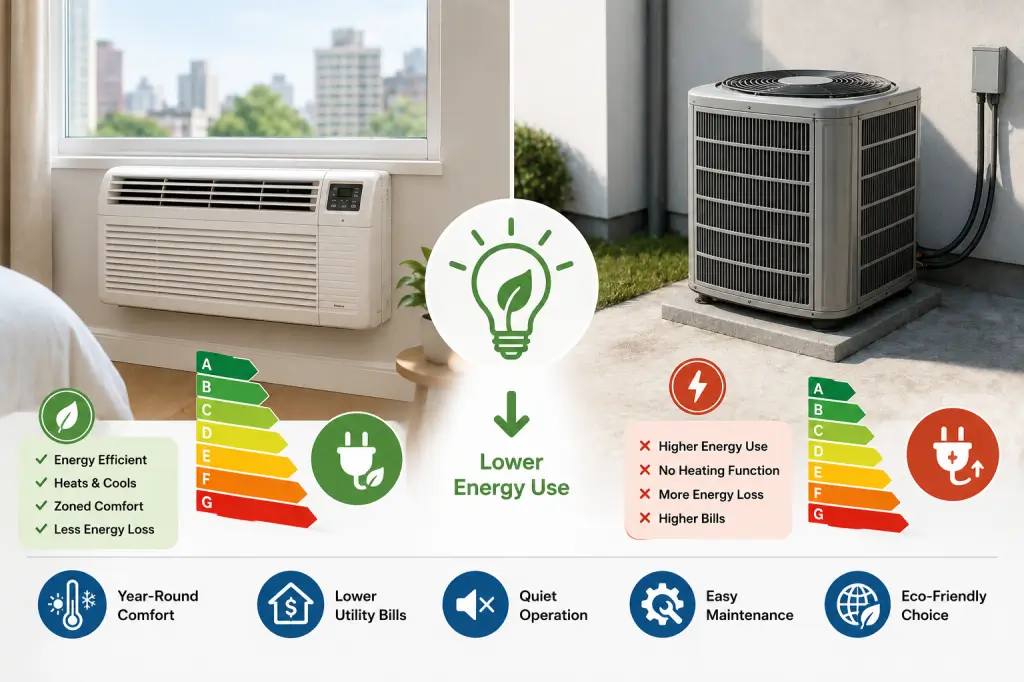
- PTAC units can save energy by heating or cooling one room at a time.
- Savings depend on correct sizing, installation, maintenance and use.
- Mini-splits may run more efficiently, while PTACs can be easier to install.
- Dirty filters, damaged coils and poor seals increase power use.
Introduction
Choosing an air conditioner can be confusing, especially when every system promises comfort and lower bills. PTAC units are common in apartments, hotels, offices, and small commercial spaces because they heat or cool one room at a time. However, their energy savings depend on the unit’s size, condition, heating method, and use. A PTAC may reduce waste in rooms that are not always occupied. At the same time, an old or poorly maintained model may use more electricity.
Air conditioning repair in Manhattan helps property owners understand these differences before choosing a system, scheduling maintenance, or replacing a damaged unit for better comfort and control.
Do PTAC Units Use Less Energy Than Central AC?
PTAC units may use less energy when only a few rooms need cooling or heating. Each unit works independently so that owners can turn off systems in empty rooms. This makes PTACs useful in hotels, apartments, offices, and buildings with changing occupancy.
Central AC serves several rooms through one system. It can work efficiently when most of a building needs the same temperature. Cooling an entire property for one occupied room may waste energy.
Professional PTAC installation and repair services help owners select the right capacity and avoid unnecessary electricity use.
Are PTAC Units More Efficient Than Mini-Splits?
Mini-splits can be more efficient since they can be adjusted to operate at a speed. They ensure a consistent temperature without switching between on and off.
PTAC units may be practical when wall sleeves already exist. Installation is faster, and each room gets separate controls. A modern PTAC with a good efficiency rating can perform well.
Compare the EER or CEER rating, room size, heating method, installation cost, and expected use.
Do PTAC Units Save More Energy Than Window ACs?
Not always. Efficiency depends on the model, age, capacity, condition, and usage. A newer window AC may use less electricity than an old PTAC.
PTACs are installed through a wall and often provide heating and cooling. They may offer stronger airflow and better controls for hotels or commercial properties.
When comparing PTAC units for sale, review estimated yearly energy use instead of choosing only by price.
What Makes a PTAC Unit Energy Efficient?
Important factors include:
- Correct capacity
- Clean filters and coils
- A sealed wall sleeve
- An accurate thermostat
- Clear airflow and drainage
- Heat-pump heating
- Timely repairs
An oversized unit may switch on and off too often. An undersized unit may run continuously. Both conditions can raise costs and reduce comfort.
Regular air conditioning repair in Manhattan can identify weak airflow, thermostat faults, electrical problems and worn parts early.
Can PTAC Maintenance Lower Energy Bills?
Yes. A clean PTAC can reach the selected temperature faster. A dirty filter makes it work harder. Blocked coils, damaged controls, and sleeve gaps may increase running time.
Check filters monthly and arrange an inspection when performance drops. Reliable AC repair in Brooklyn or PTAC service in Queens can restore cooling and airflow.
Heating parts should be checked before winter. When a coil is badly damaged, heating coil PTAC replacement in Brooklyn may improve reliability and prevent repeated breakdowns.
When Should You Repair or Replace a PTAC?
Repair may suit problems involving a filter, fan, thermostat, drain, wiring connection, or another replaceable part. Replacement may be better when the unit is old, inefficient, noisy, or frequently fails.
A technician should compare repair cost, unit condition, expected lifespan, and possible savings. Qualified PTAC installation and repair services help owners decide.
How Can Cool Air Inc. Manhattan Help?
Cool Air Inc. Manhattan provides PTAC inspection, installation, maintenance, and repair for residential and commercial properties. Get help selecting a unit, correcting performance issues, or planning a replacement.
Contact us
- Phone: 7187212131
- Email: info@coolairincmanhattan.com
Frequently Asked Questions –
Q. Do PTAC units increase electricity bills?
A. They can when old, incorrectly sized, poorly maintained, or left running in empty rooms. Proper use can reduce waste.
Q. Is a PTAC cheaper to run than central air?
A. It may cost less when selected rooms need cooling. Central AC may suit buildings where most rooms need cooling at the same time.
Q. How often should a PTAC filter be cleaned?
A. Check it monthly during regular use. Follow the manufacturer’s cleaning or replacement instructions.
Q. Are heat-pump PTACs efficient for heating?
A. They generally use less electricity than units relying mainly on electric resistance heat.
Q. How can I reduce PTAC energy use?
A. Use a comfortable setting, turn off empty-room units, clean filters, seal gaps and repair performance problems.

