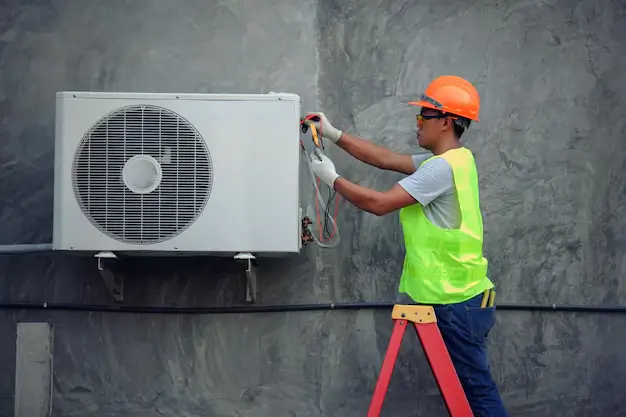
If you own a business in New York City, making sure that the environment is comfortable, healthy, and productive for both employees and customers would be among your top priorities. Your commercial Heating, Ventilation, and Air Conditioning (HVAC) system is the source of the entire mission.
By contrast with residential units, commercial HVAC installation services in NYC are convoluted and expensive, which, in the long run, will have an impact on your operational efficiency, energy costs, and even your brand reputation.
It’s not easy to handle the installation of an HVAC system in NYC because of the city’s distinctive landscape, strict codes, and severe weather conditions. This guide is a collection of indispensable expert tips that will bring you to the right decision for your next commercial HVAC installation in NYC.
Why Your Choice of a Commercial HVAC System Matters
In New York City, HVAC is not only a device that helps to maintain the temperature, but it is a vital part of the whole system.
- Energy Efficiency & Cost Savings: Commercial buildings are one of the major sources of global energy consumption, which in turn is one of the primary contributors to climate change. A system that is modern, properly sized, and professionally installed can be the main reason for your energy bills to be reduced by 20% or even more, which is a very significant amount considering the high utility rates in NYC.
- Indoor Air Quality (IAQ): The importance of the health aspect has been overemphasized after the pandemic, and consequently, better ventilation and filtration are necessities without a doubt. A proper system brings pollutants, allergens, and pathogens to a minimum; therefore, less sick leave and higher productivity are the results.
- System Longevity & Reliability: If the HVAC installation in NYC is done skillfully, it will ensure that your system operates in the way it was designed, and thus will not have to be serviced for a long time. In a city where a day without work could mean a considerable loss of money, trustworthiness is the most valuable thing.
- Compliance: NYC is at the top of the list of cities with the most rigorous building codes in the US (NYC Building Code, NYC Energy Conservation Code – NYCECC) and Local Laws (such as LL97 aimed at carbon emissions). A professional HVAC company in NYC will not only make sure your installation is efficient but also fully compliant, thus you will be free of the concerns of paying expensive fines.
Understanding the NYC-Specific Challenges
Not every HVAC experience can be easily adapted to the five boroughs. New York City is quite different in these aspects:
- Space Constraints: Generally, mechanical rooms are very small, and there is not much rooftop space available. The system must be designed cleverly and without wasting any space.
- Historic Buildings: A great number of commercial spaces are located in old buildings that have complicated floor plans, no ductwork, and preservation requirements; thus, it is necessary to come up with solutions like a high-velocity mini-duct or VRF systems.
- Noise Ordinances: The noise codes in New York City are very strict. The selection and placement of the equipment, in particular, for condensers and cooling towers, must take into account the sound levels so as not to cause noise complaints and violations.
- Logistical Hurdles: The delivery and installation of large pieces of equipment in Manhattan or crowded outer boroughs need very careful planning, permits for crane use, and coordination with building management and DOT.
Expert Tips for Your Commercial HVAC Installation Project
Tip 1: Conduct a Comprehensive Load Calculation and Needs Assessment
It is almost a sure thing that a system should not be sized merely by the square footage of the area. A professional load calculation (Manual J for commercial) takes into account:
- Building orientation and window-to-wall ratio
- Insulation levels
- Internal heat loads from occupants, lighting, and equipment
- Occupancy patterns and zoning needs
- Future expansion plans
Expert Insight: A system that is oversized will be running short cycles most of the time, thus it will be difficult to control humidity, there will be discomfort, and energy will be wasted. A system that is undersized will be running continuously as it will struggle to maintain temperature, hence the excessive wear and high costs.
Tip 2: Choose the Right Type of System for Your Space
The best system is the one that best fits your specific building and business needs. A top-tier HVAC company in NYC will guide you through options like:
- Packaged Rooftop Units (RTUs): Common for low-rise commercial buildings. All components are in one weatherproof cabinet on the roof, saving interior space.
- Variable Refrigerant Flow (VRF) Systems: Ideal for multi-zone buildings with varying needs (e.g., offices, hotels). They offer exceptional zoning flexibility and are very energy-efficient.
- Chilled Water Systems: Used for large high-rise buildings. Central chillers cool water, which is then circulated to air handlers throughout the building.
- Ductless Mini-Split Systems: A great solution for historic buildings or spaces where installing ductwork is impractical. They offer easy zoning and high efficiency.
Tip 3: Prioritize Energy Efficiency and Sustainability
The most effective system is one that meets your particular building and business requirements. A first-rate HVAC company in NYC will present to you the following options:
- Packaged Rooftop Units (RTUs): Generally used for low-rise commercial buildings. The unit contains all the components in one weatherproof cabinet on the roof, thus saving the interior space.
- Variable Refrigerant Flow (VRF) Systems: The perfect solution for multi-zone buildings with different requirements (e.g., offices, hotels). They provide absolute zoning flexibility and consume very little energy.
- Chilled Water Systems: The systems of choice for large high-rise buildings. The central chillers cool the water, which is later sent to the air handlers via the building’s water pipes.
- Ductless Mini-Split Systems: An excellent option for historic buildings or areas where the installation of ductwork is difficult. They provide simple zoning and are very efficient.
Tip 4: Vet Your HVAC Installation Partner Thoroughly
The installation quality is just as vital as the machinery. Your selection of the HVAC installation services in NYC can either elevate or ruin the entire project.
- Licensing & Insurance: Check if they hold a valid NYC Master Rigger license (if cranes are used) and are fully insured (liability, workers’ compensation).
- Experience with NYC Codes: A thorough and detailed understanding of the NYC Building Code, Mechanical Code, and DOB filing procedures is a must-have, without which the rest is nothing.
- References & Portfolio: Obtain references and make calls to references from the same type of projects (commercial offices, retail, restaurants) in the city.
- In-House vs. Subcontracted Labor: Generally, companies that have their own qualified and trained installation teams can provide better quality control and more significant accountability.
Tip 5: Plan for the Long Term: Maintenance and IAQ
Think beyond the installation day. Discuss:
- A Comprehensive Service Plan: There is no other way than regular maintenance to ensure peak performance, lifespan, and warranty compliance.
- IAQ Integrations: Consider the ease of integration of advanced filtration (MERV-13+), UV-C light systems, and humidity control right from the start.
- Building Automation Systems (BAS): In the case of larger installations, a BAS enables centralized control, scheduling, and energy usage monitoring that generates data for further optimization.
Cost Considerations for HVAC Installation in NYC
Factors influencing price include:
- System type (Rooftop units, VRF/VRV, ducted, ductless)
- Building size and complexity
- Equipment brand and efficiency rating
- Duct modification needs
- Control systems and smart thermostats
Commercial installations vary widely, so accurate estimates require a site inspection.
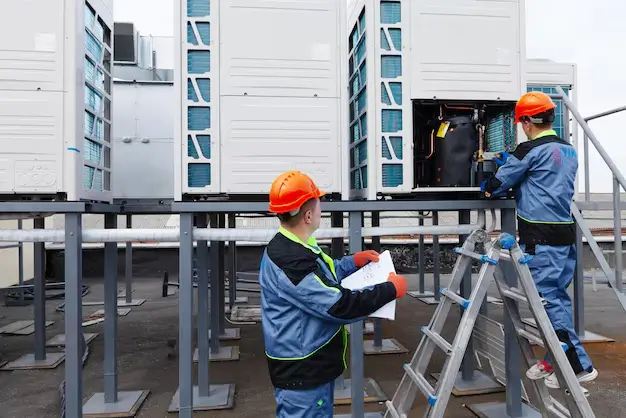
The Installation Process: What to Expect from a Professional NYC HVAC Company
A seamless project revolves around a certain structured process:
- Consultation & Discovery: A thorough discussion about the requirements, problems, and budget.
- Load Calculation & System Design: The engineers lay out the detailed plans for the utmost performance.
- Proposal & Equipment Selection: An understandable offer with the alternatives, giving the details of the product efficiencies, warranties, and estimated operating costs.
- Permitting & Logistics: The NYC HVAC company is handling all DOB permits, equipment ordering, and complicated city logistics.
- Professional Installation: The work is carried out by certified technicians who follow the plan and hardly disrupt the place.
- Testing, Balancing & Commissioning: The most important stage. The system runs at full capacity, is tested, airflow is balanced, and controls are calibrated to guarantee that it performs exactly as designed.
- Training & Documentation: Your team gets the training on the basic operations, and you have all the manuals and as-built drawings.
Maintenance Tips After Installation
- Replace filters every 1–3 months
- Schedule biannual professional inspections
- Clean vents and air returns regularly
- Use smart thermostats to keep track of system performance
- Keep outdoor units free from debris
Consistent maintenance ensures fewer repairs and better efficiency.
Partner with a NYC Expert: Cool Air Inc, Manhattan
It is the decision to choose the right partner that weighs most heavily. Manhattan Cool Air Inc. has been a reliable source of commercial HVAC installation services in NYC for several years. We understand the city’s distinct rhythm – from dealing with the DOB permit maze to coordinating a perfect rooftop lift on a packed Midtown street. Besides installing equipment, our team of licensed engineers and NATE-certified technicians provides climate solutions customized to your business objectives, thus ensuring compliance, efficiency, and comfort.
We are adept at handling the intricacies of HVAC repair in NYC, providing designer solutions, project management, and support in the long run. In case you are setting up a new construction project, a retrofit, or merely replacing an old system, do get in touch with Cool Air Inc., Manhattan, for a consultation. We would be delighted to assist you in creating a more intelligent, energy-efficient, and eco-friendly business environment.
Frequently Asked Questions (FAQs)
Q. How long does commercial HVAC installation take in NYC?
Ans : Most installations take 1–5 days, depending on system size and building complexity.
Q. What is the most efficient HVAC system for NYC businesses?
Ans : VRF/VRV systems are highly efficient and ideal for multi-zone commercial spaces.
Q. How often should my commercial HVAC system be serviced?
Ans : At least twice a year to maintain performance and avoid breakdowns.
Q. What are common signs that an HVAC system needs replacement?
Ans : Rising energy bills, inconsistent temperatures, frequent repairs, and outdated equipment.
Q. Why choose a professional HVAC company in NYC?
Ans : Professionals ensure code compliance, safety, proper installation, and long-term efficiency.
Conclusion
The right HVAC installation services in NYC will not only be essential for the comfort of your business but also for the operational efficiency. Your long-term expenses can be significantly reduced by a professional installation, the right planning, and correctly choosing the system. If you need a cool air installation in New York City that is reliable, code-compliant, and customized, businesses can contact Cool Air Inc. Manhattan for HVAC solutions that are the perfect fit for the unique needs of NYC enterprises.